<?xml version="1.0" encoding="utf-8"?>
<feed xmlns="http://www.w3.org/2005/Atom">
    <title>Garden design ideas, landscaping and decor tips</title>
    <link rel="alternate" type="text/html" href="http://gardendesigns.inrebus.com/" />
    <link rel="self" type="application/atom+xml" href="http://gardendesigns.inrebus.com/atom.xml" />
    <id>tag:gardendesigns.inrebus.com,2008-09-20://1</id>
    <updated>2010-06-09T20:33:31Z</updated>
    <subtitle>Garden design ideas from those historic times when gardens possessed intrinsic meanings</subtitle>
    <generator uri="http://www.sixapart.com/movabletype/">Movable Type 4.21-en</generator>

<entry>
    <title>Landscape gardens - their origins and meaning</title>
    <link rel="alternate" type="text/html" href="http://gardendesigns.inrebus.com/2010/06/landscape-gardens---their-origins-and-meaning.html" />
    <id>tag:gardendesigns.inrebus.com,2010://1.7</id>

    <published>2010-06-09T20:00:29Z</published>
    <updated>2010-06-09T20:33:31Z</updated>

    <summary>Contrary to popular opinion, landscape garden is not something that all of a sudden was invented in the 18th century. The truth is that most regular gardens always had adjacent &quot;islands of nature&quot;, completely untouched by the hand of landscape...</summary>
    <author>
        <name>gardenadministrator</name>
        
    </author>
    
        <category term="Garden Design Ideas" scheme="http://www.sixapart.com/ns/types#category" />
    
        <category term="Garden Views" scheme="http://www.sixapart.com/ns/types#category" />
    
        <category term="Landscape gardens" scheme="http://www.sixapart.com/ns/types#category" />
    
    <category term="landscape" label="landscape" scheme="http://www.sixapart.com/ns/types#tag" />
    
    <content type="html" xml:lang="en-US" xml:base="http://gardendesigns.inrebus.com/">
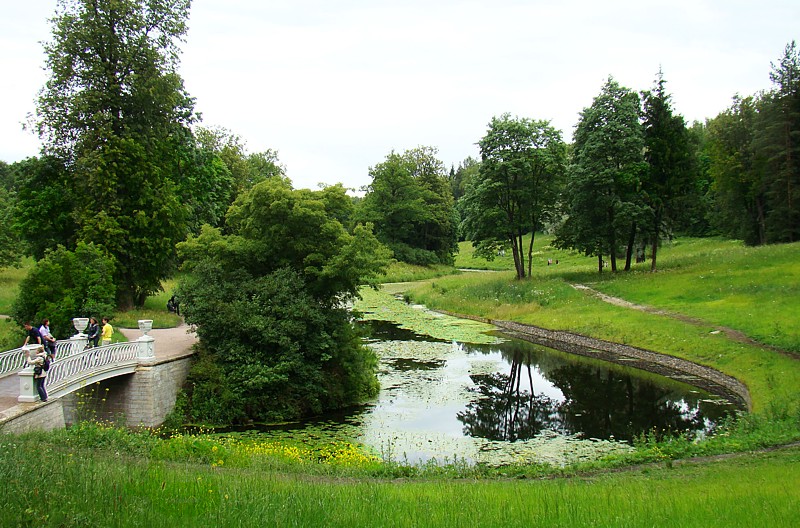
        <![CDATA[<span class="mt-enclosure mt-enclosure-image" style="display: inline;"><img alt="landscapegarden.jpg" src="http://gardendesigns.inrebus.com/landscapegarden.jpg" class="mt-image-none" height="320" width="487" /><br /><br /></span><br />Contrary to popular opinion, landscape garden is not something that all of a sudden was <br />invented in the 18th century. The truth is that most regular gardens always had adjacent "islands of nature", completely untouched by the hand of landscape designers. It would also be unfair to think that these forests, lakes and what have you received no attention from the owners of regular gardens and parks, because the premises of landscaped areas could very successfully be used for walks, not to mention hunting and other sportsmanship activities. It appears that over time the natural surroundings of regular gardens took over the garden proper and landscape gardens were the immediate aesthetic result of this change.<br /><br />It is quite interesting that just as the regular gardens of the Middle Ages followed the archetype of the Garden of Paradise, landscape gardens also received a similar theological background. The primordial garden described by Milton in Paradise Lost is very much a landscape garden, nature at its best, so to speak:<br /><br />Southward through Eden went a River large,<br />Nor chang'd his course, but through the shaggie hill<br />Pass'd underneath ingulft, for God had thrown [ 225 ]<br />That Mountain as his Garden mould high rais'd<br />Upon the rapid current, which through veins<br />Of porous Earth with kindly thirst up drawn,<br />Rose a fresh Fountain, and with many a rill<br />Waterd the Garden; thence united fell [ 230 ]<br />Down the steep glade, and met the neather Flood,<br />Which from his darksom passage now appeers,<br />And now divided into four main Streams,<br />Runs divers, wandring many a famous Realme<br />And Country whereof here needs no account, [ 235 ]<br />But rather to tell how, if Art could tell,<br />How from that Saphire Fount the crisped Brooks,<br />Rowling on Orient Pearl and sands of Gold,<br />With mazie error under pendant shades<br />Ran Nectar, visiting each plant, and fed [ 240 ]<br />Flours worthy of Paradise which not nice Art<br />In Beds and curious Knots, but Nature boon<br />Powrd forth profuse on Hill and Dale and Plaine,<br />Both where the morning Sun first warmly smote<br />The open field, and where the unpierc't shade [ 245 ]<br />Imbround the noontide Bowrs: Thus was this place,<br />A happy rural seat of various view;<br /><br />Landscape gardens also carried a certain political message. Early on, they were identified with British liberalism, distaste for tyranny and autocracy, and reliance upon home-grown aesthetics, as opposed to foreign influences. It is notable that in the 18th century liberalism was linked to rationalism. This probably explains why "liberal" approach to gardening coincided with Neoclassicism in architecture - classical art was considered the pinnacle of human intellectual history and it had to be followed and replicated because it was rationally understood as best practice.<br /><br /><br />]]>
        
    </content>
</entry>

<entry>
    <title>Baroque garden principles and modern garden design</title>
    <link rel="alternate" type="text/html" href="http://gardendesigns.inrebus.com/2009/10/baroque-garden-principles-and-modern-garden-design.html" />
    <id>tag:gardendesigns.inrebus.com,2009://1.6</id>

    <published>2009-10-04T22:37:45Z</published>
    <updated>2010-04-22T00:52:07Z</updated>

    <summary>The Italian poet Giambattista Marino deserves credit for what is often perceived as the best summation of Baroque aesthetic principles: Chi non sa far stupir, vada alla striglia! (Who is unable to cause wonderment, go to get a horse-comb). Originally...</summary>
    <author>
        <name>gardenadministrator</name>
        
    </author>
    
        <category term="Baroque gardens" scheme="http://www.sixapart.com/ns/types#category" />
    
        <category term="Garden Design History" scheme="http://www.sixapart.com/ns/types#category" />
    
        <category term="Garden Design Ideas" scheme="http://www.sixapart.com/ns/types#category" />
    
    <category term="baroque" label="Baroque" scheme="http://www.sixapart.com/ns/types#tag" />
    
    <content type="html" xml:lang="en-US" xml:base="http://gardendesigns.inrebus.com/">
        <![CDATA[<span class="mt-enclosure mt-enclosure-image" style="display: inline;"><img alt="baroque_garden.jpg" src="http://gardendesigns.inrebus.com/pics/baroque_garden.jpg" class="mt-image-none" style="" height="330" width="440" /></span><br /><br />The
Italian poet Giambattista Marino deserves credit for what is often perceived as the best summation of Baroque aesthetic principles: <i>Chi non sa far
stupir, vada alla striglia!</i> (Who is unable to cause wonderment, go to get a horse-comb). Originally applied to poetry, this principle highlights the importance of everything wondrous, amazing, extraordinary and fascinating for Baroque garden designers. There were many ways to achieve this goal.<br /><br />Baroque garden architects were especially keen on using layering in a form of terraces, cascading waterfalls and varying hights of trees and plants. One must keep in mind that such features require great engineering knowledge and the costs involved are astronomical. Not surprisingly, these elements were not used on a regular basis in medieval and even Renaissance gardens. The wealth and sophistication of garden owners were also expressed through astonishing numbers of statues, benches, staircases, gazebos, urns and other ornamental elements. As opposed to medieval gardens, the symbolism present in a garden no longer had to be interpreted through a single unifying system of Christian thought, but rather demonstrated the owner's education and taste, while attempting to amuse the visitors.<br /><br />The attention to everything out of the ordinary naturally produced interest towards curiosities: fountains that spring up unexpectedly, optical illusions, faux pavilions, hidden grottoes etc. Irony and unlikely juxtapositions often played a role in these playful contraptions.<br /><br />The most lavish of Baroque achievements are quite obviously of of reach for most of modern garden owners and designers. But the very principle of trying to astonish, to impress and to surprise can be very easily implemented while staying within a very modest budget. This includes some features already mentioned here, but these days some spectacular lighting effects can really make a garden sparkle: solar step stones, track lights, motion activated flood lights etc. You may or may not directly link all this to Baroque, but when it comes to a good conversation about your garden, why not show some knowledge of gardening design history?<br /><br />See also:<br /><h3 class="title"><a href="http://housecolumns.blogspot.com/2010/04/decorative-columns-in-garden.html">Decorative
 columns in the garden</a> at <a href="http://housecolumns.blogspot.com/">Architectural
 columns in your house</a></h3><br /><br /> <div><br /></div>]]>
        
    </content>
</entry>

<entry>
    <title>Tudor Gardens</title>
    <link rel="alternate" type="text/html" href="http://gardendesigns.inrebus.com/2009/09/tudor-gardens.html" />
    <id>tag:gardendesigns.inrebus.com,2009://1.5</id>

    <published>2009-09-24T03:24:48Z</published>
    <updated>2009-09-24T03:30:50Z</updated>

    <summary><![CDATA[ Normal 0 MicrosoftInternetExplorer4 st1\:*{behavior:url(#ieooui) } /* Style Definitions */ table.MsoNormalTable {mso-style-name:"Table Normal"; mso-tstyle-rowband-size:0; mso-tstyle-colband-size:0; mso-style-noshow:yes; mso-style-parent:""; mso-padding-alt:0in 5.4pt 0in 5.4pt; mso-para-margin:0in; mso-para-margin-bottom:.0001pt; mso-pagination:widow-orphan; font-size:10.0pt; font-family:"Times New Roman";} From "The Shakespeare garden"&nbsp; by Esther Singleton &nbsp; Several men of the...]]></summary>
    <author>
        <name>gardenadministrator</name>
        
    </author>
    
        <category term="Garden Design History" scheme="http://www.sixapart.com/ns/types#category" />
    
    <category term="medievalgardens" label="Medieval gardens" scheme="http://www.sixapart.com/ns/types#tag" />
    <category term="renaissancegardens" label="Renaissance gardens" scheme="http://www.sixapart.com/ns/types#tag" />
    <category term="tudorgardens" label="Tudor gardens" scheme="http://www.sixapart.com/ns/types#tag" />
    
    <content type="html" xml:lang="en-US" xml:base="http://gardendesigns.inrebus.com/">
        <![CDATA[<meta http-equiv="Content-Type" content="text/html; charset=utf-8"><meta name="ProgId" content="Word.Document"><meta name="Generator" content="Microsoft Word 10"><meta name="Originator" content="Microsoft Word 10"><link rel="File-List" href="file:///C:%5CDOCUME%7E1%5CAlexei%5CLOCALS%7E1%5CTemp%5Cmsohtml1%5C01%5Cclip_filelist.xml"><o:smarttagtype namespaceuri="urn:schemas-microsoft-com:office:smarttags" name="PlaceName"></o:smarttagtype><o:smarttagtype namespaceuri="urn:schemas-microsoft-com:office:smarttags" name="PlaceType"></o:smarttagtype><o:smarttagtype namespaceuri="urn:schemas-microsoft-com:office:smarttags" name="country-region"></o:smarttagtype><o:smarttagtype namespaceuri="urn:schemas-microsoft-com:office:smarttags" name="City"></o:smarttagtype><o:smarttagtype namespaceuri="urn:schemas-microsoft-com:office:smarttags" name="place"></o:smarttagtype><!--[if gte mso 9]><xml>
 <w:WordDocument>
  <w:View>Normal</w:View>
  <w:Zoom>0</w:Zoom>
  <w:Compatibility>
   <w:BreakWrappedTables/>
   <w:SnapToGridInCell/>
   <w:WrapTextWithPunct/>
   <w:UseAsianBreakRules/>
  </w:Compatibility>
  <w:BrowserLevel>MicrosoftInternetExplorer4</w:BrowserLevel>
 </w:WordDocument>
</xml><![endif]--><!--[if !mso]><object
 classid="clsid:38481807-CA0E-42D2-BF39-B33AF135CC4D" id="ieooui"></object>
<style>
st1\:*{behavior:url(#ieooui) }
</style>
<![endif]--><style>
<!--
 /* Style Definitions */
 p.MsoNormal, li.MsoNormal, div.MsoNormal
	{mso-style-parent:"";
	margin:0in;
	margin-bottom:.0001pt;
	mso-pagination:widow-orphan;
	font-size:12.0pt;
	font-family:"Times New Roman";
	mso-fareast-font-family:"Times New Roman";}
@page Section1
	{size:8.5in 11.0in;
	margin:1.0in 1.25in 1.0in 1.25in;
	mso-header-margin:.5in;
	mso-footer-margin:.5in;
	mso-paper-source:0;}
div.Section1
	{page:Section1;}
-->
</style><!--[if gte mso 10]>
<style>
 /* Style Definitions */
 table.MsoNormalTable
	{mso-style-name:"Table Normal";
	mso-tstyle-rowband-size:0;
	mso-tstyle-colband-size:0;
	mso-style-noshow:yes;
	mso-style-parent:"";
	mso-padding-alt:0in 5.4pt 0in 5.4pt;
	mso-para-margin:0in;
	mso-para-margin-bottom:.0001pt;
	mso-pagination:widow-orphan;
	font-size:10.0pt;
	font-family:"Times New Roman";}
</style>
<![endif]--><!--[if gte mso 9]><xml>
 <o:shapedefaults v:ext="edit" spidmax="1026"/>
</xml><![endif]--><!--[if gte mso 9]><xml>
 <o:shapelayout v:ext="edit">
  <o:idmap v:ext="edit" data="1"/>
 </o:shapelayout></xml><![endif]-->

<p class="MsoNormal"><st1:place><i><b><st1:placename>From "The Shakespeare garden"&nbsp; by Esther Singleton</st1:placename></b></i><st1:placetype></st1:placetype></st1:place><o:p></o:p></p>

<p class="MsoNormal"><o:p>&nbsp;</o:p></p>

<p class="MsoNormal">Several men of the New Learning, who, like Shakespeare,
lived into the reign of James I, advanced many steps beyond the botanists of
the early days of Queen Elizabeth. The old Herbals--the "Great
Herbal," from the French (1516) and the "Herbals" published by
William Turner, Dean of Wells, who had a garden of his own at Kew, treat of
flowers chiefly with regard to their properties and medical uses.<o:p></o:p></p>

<p class="MsoNormal"><o:p>&nbsp;</o:p></p>

<p class="MsoNormal">The Renaissance did indeed "paint the lily" and
"throw a perfume on the violet";-for the New Age brought recognition
of their esthetic qualities and taught scholastic minds that flowers had beauty
and perfume and character as well as utilitarian qualities. <st1:city><st1:place>Elizabeth</st1:place></st1:city>
as Queen had very different gardens to walk in than the little one in the <st1:place><st1:placetype>Tower</st1:placetype>
 of <st1:placename>London</st1:placename></st1:place> in which she took
exercise as a young Princess in 1564.<o:p></o:p></p>

<p class="MsoNormal"><o:p>&nbsp;</o:p></p>

<p class="MsoNormal">Let us look at some of them. First, that of <st1:place><st1:placename>Richmond</st1:placename>
 <st1:placetype>Palace</st1:placetype></st1:place>. Here the garden was
surrounded by a brick wall and in the center was "a round knot divided
into four quarters," with a yew-tree in the center. Sixty-two fruit-trees
were trained on the wall.<o:p></o:p></p>

<p class="MsoNormal"><o:p>&nbsp;</o:p></p>

<p class="MsoNormal">This seems to have been of the old type--the orchard-garden,
where a few old favorite flowers bloomed under the trees and in the central
"knot," or bed. In the Queen's locked garden at Havering- atte-Bower
trees, grass, and sweet herbs seem to have been more conspicuous than the
flowers. The Queen's gardens seem to have been overshadowed by those of her
subjects. One of the most celebrated belonged to Lord Burleigh, and was known
as Theobald's. Paul Hentzner, a German traveler who visited <st1:country-region><st1:place>England</st1:place></st1:country-region>
in 1598, went to see this garden the very day that Burleigh was buried.<o:p></o:p></p>

<p class="MsoNormal"><o:p>&nbsp;</o:p></p>

<p class="MsoNormal">He described it as follows:<o:p></o:p></p>

<p class="MsoNormal"><o:p>&nbsp;</o:p></p>

<p class="MsoNormal">"We left <st1:city><st1:place>London</st1:place></st1:city>
in a coach in order to see the remarkable places in its neighborhood. The first
was Theobald's, belonging to Lord Burleigh, the Treasurer. In the Gallery was
painted the genealogy of the Kings of England. From this place one goes into
the garden, encompassed with a moat full of water, large enough for one to have
the pleasure of going in a boat and rowing between the shrubs. Here are great
variety of trees and plants, labyrinths made with a great deal of labor, a jet
d'eau with its basin of white marble and columns and pyramids of wood and other
materials up and down the garden. After seeing these, we were led by the
gardener into the summer-house, in the lower part of which, built
semicircularly, are the twelve Roman Emperors in white marble and a table of
touchstone. The upper part of it is set round with cisterns of lead into which
the water is conveyed through pipes so that fish may be kept in them and in
summer time they are very convenient for bathing. In another room for
entertainment near this, and joined to it by a little bridge, was an oval table
of red marble."<o:p></o:p></p>

<p class="MsoNormal"><o:p>&nbsp;</o:p></p>

<p class="MsoNormal">Another and accurate picture of a stately Elizabethan garden
is by a most competent authority, Sir Philip Sidney (1554-86), who had a superb
garden of his own in <st1:country-region><st1:place>Kent</st1:place></st1:country-region>.
In "<st1:city><st1:place>Arcadia</st1:place></st1:city>" we read:<o:p></o:p></p>

<p class="MsoNormal"><o:p>&nbsp;</o:p></p>

<p class="MsoNormal">"Kalander one afternoon led him abroad to a
well-arrayed ground he had behind his house which he thought to show him before
his going, as the place himself more than in any other, delighted in. The
backside of the house was neither field, garden, nor orchard; or, rather, it
was both field, garden and orchard: for as soon as the descending of the stairs
had delivered they came into a place curiously set with trees of the most
taste-pleasing fruits; but scarcely had they taken that into their
consideration but that they were suddenly stept into a delicate green; on each
side of the green a thicket, and behind the thickets again new beds of flowers
which being under the trees, the trees were to them a pavilion, and they to the
trees a mosaical floor, so that it seemed that Art therein would needs be
delightful by counterfeiting his enemy, Error, and making order in confusion.
In the midst of all the place was a fair pond, whose shaking crystal was a
perfect mirror to all the other beauties, so that it bare show of two gardens;
one in deed and the other in shadows; and in one of the thickets was a fine
fountain."</p>

 ]]>
        
    </content>
</entry>

<entry>
    <title>Garden views from old books and prints</title>
    <link rel="alternate" type="text/html" href="http://gardendesigns.inrebus.com/2009/09/garden-views-from-old-books-and-prints.html" />
    <id>tag:gardendesigns.inrebus.com,2009://1.4</id>

    <published>2009-09-07T00:06:56Z</published>
    <updated>2009-09-07T00:43:29Z</updated>

    <summary></summary>
    <author>
        <name>gardenadministrator</name>
        
    </author>
    
        <category term="Garden Design History" scheme="http://www.sixapart.com/ns/types#category" />
    
        <category term="Garden Design Ideas" scheme="http://www.sixapart.com/ns/types#category" />
    
        <category term="Garden Views" scheme="http://www.sixapart.com/ns/types#category" />
    
        <category term="Garden plans" scheme="http://www.sixapart.com/ns/types#category" />
    
    <category term="gardendesign" label="garden design" scheme="http://www.sixapart.com/ns/types#tag" />
    
    <content type="html" xml:lang="en-US" xml:base="http://gardendesigns.inrebus.com/">
        <![CDATA[ <img src="http://gardendesigns.inrebus.com/pics/parkmontmorence_small.jpg" />
<br />
 <img src="http://gardendesigns.inrebus.com/pics/pavillion.jpg" />
<br />
 <img src="http://gardendesigns.inrebus.com/pics/augustins.jpg" />
<br />
 <img src="http://gardendesigns.inrebus.com/pics/chateauavecparterres.jpg" />]]>
        
    </content>
</entry>

<entry>
    <title>Medieval garden: design ideas and symbolism</title>
    <link rel="alternate" type="text/html" href="http://gardendesigns.inrebus.com/2009/08/garden-design-ideas-from-the-middle-ages.html" />
    <id>tag:gardendesigns.inrebus.com,2009:/mt//1.2</id>

    <published>2009-08-28T02:22:31Z</published>
    <updated>2009-09-24T03:17:45Z</updated>

    <summary> At the very core of medieval aesthetics lies the concept of Creation. The entire universe was firmly believed to have been designed and created by the omnipotent God, the Source of everything that is good, right and beautiful. As...</summary>
    <author>
        <name>gardenadministrator</name>
        
    </author>
    
        <category term="Garden Design History" scheme="http://www.sixapart.com/ns/types#category" />
    
        <category term="Garden Design Ideas" scheme="http://www.sixapart.com/ns/types#category" />
    
    <category term="historyofgardens" label="history of gardens" scheme="http://www.sixapart.com/ns/types#tag" />
    <category term="medievalgardens" label="Medieval gardens" scheme="http://www.sixapart.com/ns/types#tag" />
    
    <content type="html" xml:lang="en-US" xml:base="http://gardendesigns.inrebus.com/">
        <![CDATA[<div style="margin: 10px 1em 4px 18px; display: block; float: left;">

<img src="http://gardendesigns.inrebus.com/pics/annunciation.jpg" />
</div>
<br />At the very core of medieval aesthetics lies the concept of Creation.
The entire universe was firmly believed to have been designed and
created by the omnipotent God, the Source of everything that is good,
right and beautiful. As a natural outcome of such a worldview certain
objects and systems were seen as directly modeled after the Universe
itself. In modern accounts this aesthetic principle is described in
terms of macrocosm and microcosm. Along with the human body and church
edifices, gardens were deemed to represent the essential structure of
the entire cosmos, because a garden contains within it the same
harmony, rhythm and richness that characterizes the created world as a
whole. In addition, a medieval garden was supposed to be read in the
manner of a book, thus revealing through symbols and allegories many
spiritual truths, as well as general knowledge about nature and the
humanity. A trained eye of a medieval monk or an educated layman never
failed to decode the message hidden in every detail of a garden design.<br /><br />A
typical monastery garden had the form of a square divided into four
parts by paths. The crossing of the paths obviously pointed to the
death of Jesus Christ on the cross and His subsequent resurrection. In
the middle of the garden one would often find a well, a fountain or a
small pond, with water acting as a symbol of life or knowledge.
Sometimes, a tree planted in the middle of a medieval garden served as
a reminder of Paradise. This idea helped create a new concept of an
"enclosed garden" (hortus conclusus), because after the Fall the Garden
of Eden became inaccessible. Also, Virgin Mary became closely
associated with hortus conclusus as a symbol of perpetual virginity,
chastity and yet the ability to bear fruit. The Annunciation illustration from a medieval "Book of hours" shown above has some very specific plant symbols connected with Our Lady: 
the white lily, emblem of her
purity and holiness,the red rose, emblem of her burning love
of God, the myrtle, emblem of her virginity, the violet,
emblem of her humility, the columbine, emblem of the Holy
Spirit, and the strawberry, emblem of the divine fruit of her
womb, Jesus.

<div style="margin: 10px 1em 4px 18px; display: block; float: right;">

<img src="http://gardendesigns.inrebus.com/pics/notre_dame_abbey_St_mour.jpg" />
</div>

<br /><br />These motifs were to
some extent also present in the gardens of medieval nobility, but these
"enclosed gardens" of castles and estates were often more utilitarian
in their use, providing herbs, vegetables and, one can assume,
poisonous substances for various uses. These gardens also incorporated
some aspects of "loci amoeni" (pleasurable places) of Antiquity, with
emphasis of earthly pleasures.<br /><br />It appears that medieval notions
of garden design can be easily implemented in modern times. The basic
layout of such a garden would be simple, as described above, but rich
symbolism must be established through the use of just a few accents.
The medieval inspiration of your garden can ultimately be purely
cerebral. If you have a solitary tree or a centrally located fountain
all it takes is a mental exercise in seeing these objects as
representations of some important universal truths and archetypes.<br /> 

<img src="http://gardendesigns.inrebus.com/pics/hortus_conclusus.jpg" />]]>
        
    </content>
</entry>

<entry>
    <title>Formal Garden vs. Landscape Design school</title>
    <link rel="alternate" type="text/html" href="http://gardendesigns.inrebus.com/2009/08/formal-garden-vs-landscape-design-school.html" />
    <id>tag:gardendesigns.inrebus.com,2009://1.3</id>

    <published>2009-08-27T01:36:06Z</published>
    <updated>2009-08-29T01:51:33Z</updated>

    <summary> Normal 0 MicrosoftInternetExplorer4 st1\:*{behavior:url(#ieooui) } /* Style Definitions */ table.MsoNormalTable {mso-style-name:&quot;Table Normal&quot;; mso-tstyle-rowband-size:0; mso-tstyle-colband-size:0; mso-style-noshow:yes; mso-style-parent:&quot;&quot;; mso-padding-alt:0in 5.4pt 0in 5.4pt; mso-para-margin:0in; mso-para-margin-bottom:.0001pt; mso-pagination:widow-orphan; font-size:10.0pt; font-family:&quot;Times New Roman&quot;;} Sir Reginald Theodore Blomfield discusses the main differences between formal and landscape...</summary>
    <author>
        <name>gardenadministrator</name>
        
    </author>
    
        <category term="Garden Design History" scheme="http://www.sixapart.com/ns/types#category" />
    
    <category term="formalgardendesign" label="Formal garden design" scheme="http://www.sixapart.com/ns/types#tag" />
    
    <content type="html" xml:lang="en-US" xml:base="http://gardendesigns.inrebus.com/">
        <![CDATA[<meta http-equiv="Content-Type" content="text/html; charset=utf-8"><meta name="ProgId" content="Word.Document"><meta name="Generator" content="Microsoft Word 10"><meta name="Originator" content="Microsoft Word 10"><link rel="File-List" href="file:///C:%5CDOCUME%7E1%5CAlexei%5CLOCALS%7E1%5CTemp%5Cmsohtml1%5C01%5Cclip_filelist.xml"><o:smarttagtype namespaceuri="urn:schemas-microsoft-com:office:smarttags" name="place"></o:smarttagtype><o:smarttagtype namespaceuri="urn:schemas-microsoft-com:office:smarttags" name="country-region"></o:smarttagtype><!--[if gte mso 9]><xml>
 <w:WordDocument>
  <w:View>Normal</w:View>
  <w:Zoom>0</w:Zoom>
  <w:Compatibility>
   <w:BreakWrappedTables/>
   <w:SnapToGridInCell/>
   <w:WrapTextWithPunct/>
   <w:UseAsianBreakRules/>
  </w:Compatibility>
  <w:BrowserLevel>MicrosoftInternetExplorer4</w:BrowserLevel>
 </w:WordDocument>
</xml><![endif]--><!--[if !mso]><object
 classid="clsid:38481807-CA0E-42D2-BF39-B33AF135CC4D" id="ieooui"></object>
<style>
st1\:*{behavior:url(#ieooui) }
</style>
<![endif]--><style>
<!--
 /* Style Definitions */
 p.MsoNormal, li.MsoNormal, div.MsoNormal
	{mso-style-parent:"";
	margin:0in;
	margin-bottom:.0001pt;
	mso-pagination:widow-orphan;
	font-size:12.0pt;
	font-family:"Times New Roman";
	mso-fareast-font-family:"Times New Roman";}
@page Section1
	{size:8.5in 11.0in;
	margin:1.0in 1.25in 1.0in 1.25in;
	mso-header-margin:.5in;
	mso-footer-margin:.5in;
	mso-paper-source:0;}
div.Section1
	{page:Section1;}
-->
</style><!--[if gte mso 10]>
<style>
 /* Style Definitions */
 table.MsoNormalTable
	{mso-style-name:"Table Normal";
	mso-tstyle-rowband-size:0;
	mso-tstyle-colband-size:0;
	mso-style-noshow:yes;
	mso-style-parent:"";
	mso-padding-alt:0in 5.4pt 0in 5.4pt;
	mso-para-margin:0in;
	mso-para-margin-bottom:.0001pt;
	mso-pagination:widow-orphan;
	font-size:10.0pt;
	font-family:"Times New Roman";}
</style>
<![endif]--><!--[if gte mso 9]><xml>
 <o:shapedefaults v:ext="edit" spidmax="1026"/>
</xml><![endif]--><!--[if gte mso 9]><xml>
 <o:shapelayout v:ext="edit">
  <o:idmap v:ext="edit" data="1"/>
 </o:shapelayout></xml><![endif]-->

<p class="MsoNormal">Sir Reginald Theodore Blomfield discusses the main
differences between formal and landscape schools of design in his 1901 book
"The formal garden in <st1:country-region><st1:place>England</st1:place></st1:country-region>".</p><p class="MsoNormal"><o:p>&nbsp;</o:p></p>

<p class="MsoNormal"><o:p></o:p>The question at issue is a very simple one. Is the garden to
be considered in relation to the house, and as an integral part of a design
which depends for its success on the combined effect of house and garden; or is
the house to be ignored in dealing with the garden ? The latter is the position
of the landscape gardener in real fact. There is some affectation in his
treatises of recognizing the relationship between the two, but his actual
practice shows that this admission is only borrowed from the formal school to
save appearances, and is out of court in a method which systematically
dispenses with any kind of system whatever.<o:p></o:p></p>

<p class="MsoNormal"><o:p>&nbsp;</o:p></p>

<p class="MsoNormal">The formal treatment of gardens ought, perhaps, to be called
the architectural treatment of gardens, for it consists in the extension of the
principles of design which govern the house to the grounds which surround it.
Architects are often abused for ignoring the surroundings of their buildings in
towns, and under conditions which make it impossible for them to do otherwise;
but if the reproach has force, and it certainly has, it applies with greater
justice to those who control both the house and its surroundings, and yet
deliberately set the two at variance. The object of formal gardening is to
bring the two into harmony, to make the house grow out of its surroundings, and
to prevent its being an excrescence on the face of nature. The building cannot
resemble anything in nature, unless you are content with a mud-hut and cover it
with grass. Architecture in any shape has certain definite characteristics
which it cannot get rid of; but, on the other hand, you can lay out the
grounds, and alter the levels, and plant hedges and trees exactly as you
please; in a word, you can so control and modify the grounds as to bring nature
into harmony with the house, if you cannot bring the house into harmony with
nature. The harmony arrived at is not any trick of imitation, but an affair of
a dominant idea which stamps its impress on house and grounds alike.<o:p></o:p></p>

<p class="MsoNormal"><o:p>&nbsp;</o:p></p>

<p class="MsoNormal">The formal school insists upon design ; the house and the
grounds should be designed together and in relation to each other ; no attempt
should be made to conceal the design of the garden, there being no reason for
doing so, but the bounding lines, whether it is the garden wall or the lines of
paths and parterres, should be shown frankly and unreservedly, and the garden
will be treated specifically as an enclosed space to be laid out exactly as the
designer pleases. The landscape gardener, on the other hand, turns his back
upon architecture at the earliest opportunity and devotes his energies to
making the garden suggest natural scenery, to giving a false impression as to
its size by sedulously concealing all boundary lines, and to modifying the
scenery beyond the garden itself, by planting or cutting down trees, as may be
necessary to what he calls his picture. In matters of taste there is no arguing
with a man. Probably people with a feeling for design and order will prefer the
formal garden, while the landscape system, as 1t requires no knowledge of
design, appeals to the average person who " knows what he likes," if
he does not know anything else.<o:p></o:p></p>

<p class="MsoNormal"><o:p>&nbsp;</o:p></p>

<p class="MsoNormal">The word " garden " itself means an enclosed
space, a garth or yard surrounded by walls, as opposed to unenclosed fields and
woods. The formal garden, with its insistence on strong bounding lines, is,
strictly speaking, the only "garden " possible ; and it was not till
the decay of architecture, which began in the middle of the eighteenth century,
that any other method of dealing with a garden was entertained.<o:p></o:p></p>

<p class="MsoNormal"><o:p>&nbsp;</o:p></p>

 ]]>
        
    </content>
</entry>

</feed>